AKSHRA GOLD

Gold tips

gold-purity-testing-in-vijayawada
Gold tips

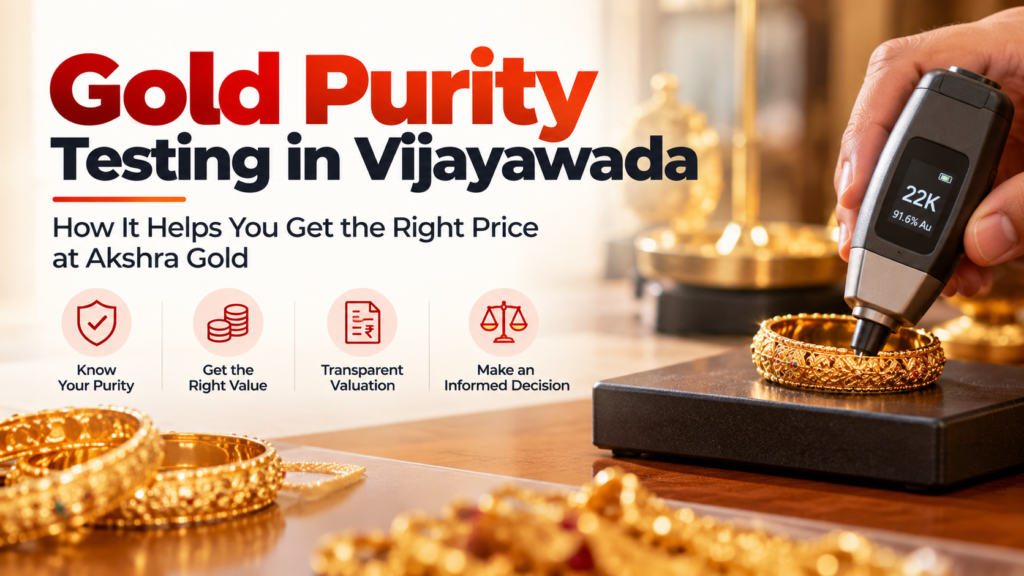
Gold Purity Testing in Vijayawada: How It Helps You Get the Right Price at Akshra Gold

Gold Purity Testing in Vijayawada can help you understand the value of your old gold jewellery before selling or exchanging it. Gold is more than a beautiful ornament; it is a valuable asset that can be converted into cash or exchanged for new jewellery when needed. Before making a decision, it is important to understand its purity and value. At Akshra Gold, customers can enquire about having their gold purity assessed so they can better understand the gold content and its value before a buying or exchange transaction. Why Should You Care About Gold Purity? Gold purity in jewellery is measured in karats (K). Jewellery is often made by combining gold with other metals to improve its strength and durability. Because the proportion of pure gold varies, the value of jewellery can vary too. Karat Approximate Gold Purity 24K 99.9% 22K 91.6% 18K 75% 14K 58.5% For example, 22K jewellery contains a higher proportion of gold than 18K jewellery. Therefore, its gold value will generally be higher for the same net gold weight, assuming the same applicable market-rate basis. How Does Gold Purity Testing in Vijayawada Help You Get the Right Price? 1. Know the Purity of Your Gold If you have old ornaments at home, you may not know their exact purity or gold content. A purity test helps assess the gold content using an appropriate testing method rather than relying only on colour or appearance. Ask the buyer to explain the test result and how it affects the valuation. 2. Understand the Value of the Gold You Bring Gold value depends on the net gold weight, purity, and applicable gold rate. A purity test helps establish the purity used in the calculation, making it easier to understand how the offered price was determined. 3. Reduce Uncertainty When Selling Old Jewellery Older jewellery may include stones, beads, enamel, or other non-gold components. The net gold weight may differ from the total jewellery weight. Ask how these components are treated and how the net weight is determined before accepting an offer. 4. Make an Informed Financial Decision Knowing the test result gives you a better basis for asking questions and comparing offers. Before proceeding, ask about the purity result, net gold weight, applicable rate, deductions, and any service or melting charges. 5. Understand the Valuation Process A clear explanation of the test and calculation helps you make a decision with greater confidence. Request a breakdown of the valuation so you can see how the final offer has been calculated. How Is Gold Value Calculated? A simple way to understand the calculation is: Gold Value = Net Gold Weight × Applicable Gold Rate per Gram For example, if a piece of jewellery has 10 grams of net gold weight and is assessed as 22K (approximately 91.6% gold), the valuation should use the applicable 22K rate rather than the 24K rate. The final amount may also depend on the buyer’s stated deductions or charges, if any. Why Choose Akshra Gold for Gold Valuation? Before selling or exchanging gold, it is useful to understand its purity, net weight, and the rate being applied. Akshra Gold encourages customers to ask questions and understand the basis of the valuation before proceeding. If you are unsure about the weight or price offered, ask for the purity result, net gold weight, applicable rate, and a clear explanation of any deductions or charges. Understanding these details can help you compare options and make a more informed decision. Conclusion Your old gold ornaments may have significant value, but the amount depends on their purity, net gold weight, and the applicable gold rate. A gold purity test can reduce uncertainty and help you understand the basis of an offer. If you plan to sell or exchange old jewellery, contact Akshra Gold to enquire about a purity assessment and valuation before making your decision. For reliable information before selling or exchanging your old jewellery, enquire about Gold Purity Testing in Vijayawada at Akshra Gold and understand your gold’s assessed purity, net weight, and valuation.

Per Gram Gold Rate
Gold tips

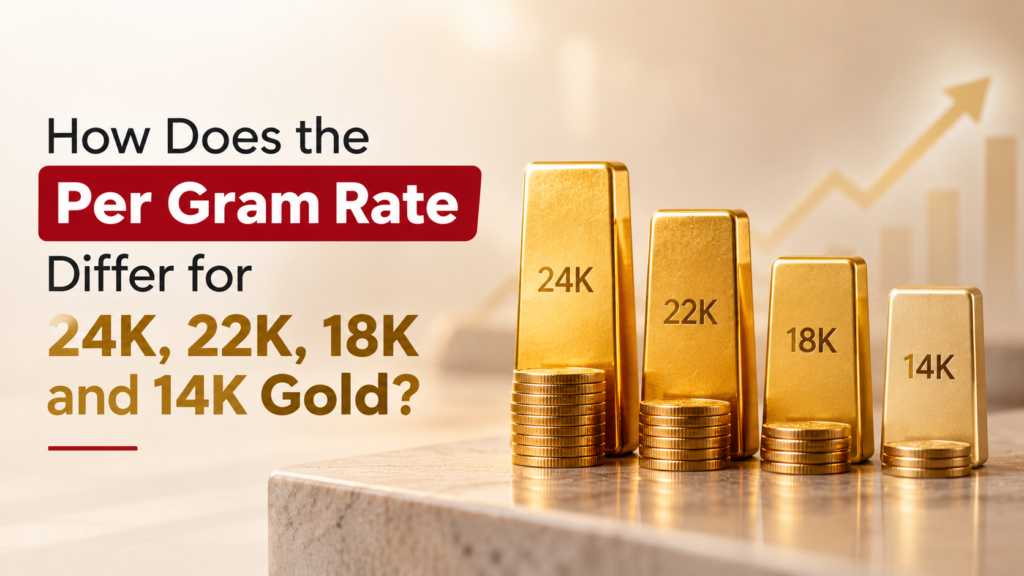
Per Gram Gold Rate: 24K, 22K, 18K & 14K Gold

Understanding the Per Gram Gold Rate is important when comparing different types of gold. The rate can vary significantly between 24K, 22K, 18K and 14K gold because each type contains a different percentage of pure gold. The higher the purity, the higher the underlying value of the gold per gram. While the gold rate is an important factor, the final price of jewellery can also include making charges, GST, wastage, design charges and other applicable costs. What Does Gold Karat Mean? The term karat refers to the purity of gold. 24K gold represents approximately 99.9% pure gold. Other metals such as silver, copper, zinc and palladium may be added to gold to create alloys that are stronger and more suitable for jewellery. As more alloy metals are added, the karat value decreases. Here is a simple comparison: Gold Purity Approximate Pure Gold Content 24K 99.9% 22K 91.6% 18K 75% 14K 58.5% Since the amount of pure gold differs across these categories, the underlying per-gram value of each type of gold also differs. 24K Gold Per Gram Rate 24K gold is the purest form of gold commonly traded, with approximately 99.9% purity. Gold bars, coins and many investment products are commonly made using 24K gold. However, 24K gold is relatively soft compared with lower-karat gold, making it less suitable for jewellery that needs to withstand regular wear and physical activity. 22K Gold Per Gram Rate 22K gold contains approximately 91.6% pure gold. Because it contains less pure gold than 24K, its underlying gold value per gram is lower than 24K gold. 22K gold is extremely popular among Indian jewellery buyers because it offers a good balance between purity and durability. Many traditional Indian gold jewellery designs are made using 22K gold. 18K Gold Per Gram Rate 18K gold contains approximately 75% pure gold and around 25% other metals. Because it contains less pure gold than 22K and 24K gold, its underlying value per gram is lower. The additional metals make 18K gold relatively harder, making it suitable for diamond jewellery, contemporary jewellery designs and lightweight jewellery. 14K Gold Per Gram Rate 14K gold contains approximately 58.5% pure gold, with the remaining percentage consisting primarily of other metals. Since the pure gold content is lower than 18K, 22K and 24K gold, its underlying gold value per gram is also lower. The higher proportion of alloy metals makes 14K gold harder and suitable for everyday jewellery and designs that require greater durability. Why Are the Rates Different? The simplest way to understand why the gold rate differs is to look at the amount of pure gold contained in each karat category. If we know the rate of 24K gold, we can estimate the underlying value of lower-karat gold based on its approximate purity. 1 gm of 22K gold ≈ 1 gm of 24K gold × 91.6% 1 gm of 18K gold ≈ 1 gm of 24K gold × 75% 1 gm of 14K gold ≈ 1 gm of 24K gold × 58.5% For example, if the underlying 24K gold rate is ₹10,000 per gram, the approximate pure-gold component would be ₹9,160 for 22K, ₹7,500 for 18K and ₹5,850 for 14K, before considering jewellery-specific charges. However, the actual selling price of jewellery can differ because of making charges, GST, wastage, design charges and other applicable costs. Understanding the Per Gram Gold Rate When comparing the Per Gram Gold Rate across 24K, 22K, 18K and 14K gold, always consider purity first. The quoted rate may represent only the underlying gold value and may not include jewellery-making and other charges. Which Form of Gold Should I Choose? The right type of gold depends on your purpose, budget and how you plan to use it. Gold Type Purity Common Use 24K 99.9% Investment, bars and coins 22K 91.6% Traditional gold jewellery 18K 75% Diamond and contemporary jewellery 14K 58.5% Durable everyday jewellery If you are purchasing gold primarily as an investment, 24K gold may be suitable. For traditional jewellery, 22K gold is a popular choice, while 18K and 14K can be considered for contemporary and everyday-wear jewellery. What Should You Check Before Buying Gold? Check the gold purity and karat value. Look for the BIS hallmark where applicable. Ask for a clear breakdown of the gold rate. Check the applicable making charges. Understand wastage and other charges. Check the applicable GST. Before buying gold, make sure you understand the pricing breakdown and verify the purity and hallmark information. Final Takeaway The difference between 24K, 22K, 18K and 14K gold primarily comes down to their pure gold content. Higher-karat gold generally has a higher underlying value per gram, while lower-karat gold contains more alloy metals that provide additional hardness and durability. At Akshra Gold, we believe informed customers can make better gold-buying decisions. Understanding purity, the Per Gram Gold Rate, making charges and other applicable costs can help you choose the right type of gold based on your needs and budget.

gold price fluctuations
Gold tips

How do fluctuations in global currency rates causes gold price fluctuations?

When you look at gold prices in India, you may notice that, contrary to the subtle shifts in international gold prices, the price of gold can change quite frequently. One significant reason behind these gold price fluctuations is the currency exchange rate, particularly the value of the Indian Rupee versus the US Dollar. International gold prices are traded in global markets and are typically quoted in US Dollars. The movement of the Indian Rupee against the US Dollar can therefore directly influence the price of gold in India. According to the World Gold Council, exchange rates are one of the factors that can contribute to differences between international gold prices and local Indian gold prices. Why Does the US Dollar Matter to Gold Prices? Imagine gold prices across the globe being quoted at a specific rate in US Dollars. For an Indian customer, that dollar price needs to be converted into Indian Rupees to arrive at an approximate domestic gold price. International Gold Price × USD-INR Exchange Rate = Approximate Indian Gold Price This is a simplified representation of how the relationship works. The actual retail gold price can also depend on import duties, taxes, local market conditions, making charges and other costs. What Happens When the Rupee Becomes Weaker? A weaker Rupee typically leads to an increase in the price paid for imported gold in India. If the international price of gold remains unchanged but the US Dollar becomes more expensive compared with the Indian Rupee, importers need to spend more Rupees to purchase the same amount of gold. This increased cost can eventually be reflected in domestic gold prices. Rupee weakens → Imported gold becomes more expensive → Indian gold prices can increase A Simple Example Let’s consider a simple example: Scenario International Gold Price USD-INR Rate Initial $4,000 / ounce ₹90 / USD After Rupee Weakens $4,000 / ounce ₹95 / USD The international gold price has remained the same at $4,000 per ounce. However, the USD-INR exchange rate has moved from ₹90 to ₹95. This means that more Indian Rupees are required to purchase the same amount of gold priced in US Dollars. Consequently, the Rupee value of gold can increase even when the international gold price remains unchanged. What Happens When the Rupee Becomes Stronger? The reverse can happen when the Indian Rupee strengthens against the US Dollar. If international gold prices remain stable but fewer Rupees are required to purchase one US Dollar, the Rupee value of imported gold can decrease. Rupee strengthens → Imported gold becomes relatively cheaper → Indian gold prices can face downward pressure Does the Currency Rate Alone Decide Today’s Gold Price? No. Currency movement is only one part of the equation. Gold prices are influenced by several factors, including international gold prices, interest-rate expectations, investor demand, geopolitical risks, government policies, import duties and local demand. For example, gold may rise internationally because investors are looking for safe-haven assets. At the same time, the Indian Rupee may weaken against the Dollar. When these two factors occur together, Indian gold prices can experience stronger upward pressure. Conversely, international gold prices could fall while a stronger Rupee reduces the extent of the decline in Indian gold prices. How Does This Affect Someone Selling Gold? For someone looking to sell old gold jewellery, the prevailing gold price is an important factor in determining the potential value of the jewellery. However, the amount offered for jewellery is not determined by the currency exchange rate alone. Several other factors need to be considered. Gold purity Eligible gold weight Applicable gold rate Applicable deductions Terms and conditions of the transaction For example, 22K jewellery and 18K jewellery contain different levels of pure gold. Therefore, their value per gram will differ. Why Should Gold Sellers Care About Currency Movements? Understanding the relationship between the Rupee and the Dollar can help customers better understand why today’s gold price may differ from yesterday’s price. Customers do not need to monitor the foreign exchange market every day. However, understanding how the international gold price and USD-INR exchange rate interact can make gold price fluctuations easier to understand. The Key Relationship Gold has a global price, but Indian customers buy and sell gold in Rupees. When the value of the Rupee changes against the US Dollar, the Rupee equivalent of internationally priced gold can also change. The Bottom Line Currency fluctuations can have a significant impact on India’s gold prices because gold is internationally traded in US Dollars, while Indian customers transact in Rupees. A weaker Rupee can increase the Rupee value of gold, while a stronger Rupee can reduce the impact of international price increases. However, currency movement should never be considered in isolation. International gold prices, taxes, import policies, interest rates, investor demand and local market conditions can all influence the final price. For anyone wishing to buy or sell gold, understanding the connection between the Dollar, the Rupee and international gold prices can make daily gold price fluctuations much easier to understand.

purity of gold
Gold tips

Purity of Gold: Why It Matters Before Selling Your Old Gold Jewellery

Selling old gold jewellery could be quite an important financial decision to make. Be it a chain, bangles, rings, earrings, coins, broken gold or any other jewellery item, one of the most important stages prior to selling is understanding the purity of gold. Of course, many people already know the karat of their jewellery; however, the actual purity could differ from what they think. Since gold purity plays a key role in its value, getting your jewellery tested before selling could help you estimate its real value. At Akshra Gold, transparency is one of the priorities in the gold selling process. Knowing the actual composition of your gold could help you make a more well-informed decision before accepting an offer. What Is Gold Purity Testing? The main purpose of gold purity testing is to determine how much pure gold is contained in a particular jewellery item. Gold jewellery is usually available in various purities, such as: 24K – around 99.9% pure gold 22K – around 91.6% pure gold 18K – around 75% pure gold 14K – around 58.5% pure gold The remaining percentage generally consists of other metals that are added to jewellery to improve durability and make it suitable for everyday use. Therefore, a 22K jewellery item contains considerably more pure gold than an 18K item of the same weight. Understanding the purity level is therefore important when estimating the value of your jewellery. Why Is Gold Purity Testing Important? 1. Purity Has a Direct Influence on Gold Value One of the major reasons why it is necessary to test gold purity before selling is that purity affects its value. The value of your jewellery is not estimated only based on its total weight. The percentage of pure gold contained in the item is also taken into consideration. For example, two jewellery items could weigh 10 grams each. However, if one is 22K and the other is 18K, their values would be different. Gold purity testing helps identify the purity and provides a basis for calculating the value. 2. Hallmark Doesn’t Substitute the Assessment Many jewellery pieces carry a hallmark that indicates their declared purity. However, when selling old gold, buyers may still assess the jewellery themselves. Jewellery can also be repaired, altered or modified over time. Therefore, testing provides an additional assessment of the item being offered for sale. 3. It Helps You Understand the Valuation Process When selling gold, the final value is generally influenced by: Gold purity × Gold weight × Applicable gold rate If you do not know the purity, it can be difficult to understand how the final amount has been calculated. Therefore, testing can help you understand the calculation process and compare offers from different buyers. 4. Different Pieces of Jewellery May Have Different Purity Do not assume that every jewellery piece you own has the same purity. Your chain may be 22K Your ring may be 18K Diamond jewellery may be 18K A coin may have another purity Testing individual jewellery pieces can therefore provide a more precise understanding of their gold content. 5. Precise Testing Helps Improve Transparency When selling a valuable asset like gold, transparency is important. A professional buyer should be able to explain: How the gold purity is tested What purity was identified How the weight is calculated What gold rate is being applied Whether there are any deductions How the final amount is calculated This helps you understand the process instead of simply receiving a final number without an explanation. How Is Gold Purity Tested? Modern gold buyers may use advanced technologies such as XRF (X-ray fluorescence) testing to estimate the composition of gold. XRF testing can help identify the metals present in a jewellery item and estimate its purity without melting the jewellery. At Akshra Gold, customers can have their gold evaluated as part of the buying process. This assessment helps establish a basis for valuation and gives customers greater clarity about the purity of gold they are selling. Why Choose a Transparent Gold Buyer? When selling gold, do not focus only on the amount of money offered by the buyer. Focus on the complete valuation process instead. A transparent gold buyer should provide clarity about: Purity → Weight → Gold Rate → Deductions → Final Value Understanding these steps can make it easier to evaluate whether an offer is based on a clear and transparent valuation process. What Should You Ask Before Selling Your Gold? What is the purity of my gold? Ask the buyer to explain the purity identified during the testing process. What is the net gold weight? If your jewellery contains stones or other materials, ask how these are accounted for during the valuation. What gold rate are you applying? Gold prices change regularly, so ask which gold rate is being used for the transaction. Are there any deductions? Find out whether there are any charges or deductions that could affect the final amount. How was the final amount calculated? A professional buyer should be able to explain the calculation clearly and answer your questions. Sell Gold With Confidence at Akshra Gold Your gold deserves a transparent valuation. At Akshra Gold, the priority is to help customers understand the value of their gold before the transaction. Whether you are selling old gold jewellery, broken gold, unused ornaments, rings, chains, bangles, coins or other gold items, understanding its composition is an important step towards determining its value. Do not simply ask, “How much will I get for my gold?” Ask: “What is the purity of my gold and how is its value calculated?” Knowing the relevant purity, weight and applicable gold rate can help you make a more informed decision before selling. Akshra Gold Know Your Gold. Know Its Value. Sell With Confidence. Contact Akshra Gold

no 1 gold buyers in vijayawada
Gold tips

No 1 Gold Buyers in Vijayawada: How to Get the Right Value for Your Old Gold

If you are searching for no 1 gold buyers in Vijayawada, it is important to understand how your gold is valued before choosing a buyer. Whether you have old jewellery, damaged or broken ornaments, gold coins, or jewellery that you no longer use, selling gold can be a convenient way to make use of its value. Before selling your gold, however, you should understand the valuation process and the factors that can affect the total amount you receive. Why Are People Selling Their Old Gold? Gold jewellery can remain unused for years because of changing designs, new preferences or financial requirements. Instead of keeping unused jewellery at home, some people choose to sell it and convert its value into cash. Common reasons for selling old gold jewellery include: Financial requirements Upgrading jewellery Selling old designs Selling damaged or broken jewellery Converting unused gold into cash Meeting unexpected expenses Changing jewellery preferences Since gold prices can fluctuate frequently, many gold owners want to know the current value of their jewellery before deciding whether to sell it. How Is Old Gold Valued? The value of old gold jewellery can depend on several factors. The most important factors generally include gold purity, eligible gold weight and the applicable gold rate. 1. Gold Purity Gold jewellery is available in different purity levels, including 18K, 20K, 22K and 24K. Since purity determines the proportion of pure gold contained in the jewellery, it is an important factor when calculating its value. A professional gold buyer should test the jewellery and explain its purity before calculating the final value. Understanding the purity of your gold can help you understand why different jewellery pieces may receive different valuations. 2. Gold Weight The jewellery needs to be weighed to determine the quantity of gold being considered for valuation. If your jewellery contains stones, beads, enamel or other non-gold elements, these may need to be accounted for separately when determining the eligible gold weight. A transparent gold buyer should clearly explain how the final gold weight has been calculated. 3. Current Gold Rate The market price of gold changes regularly. The applicable rate used to evaluate your jewellery can depend on the purity of the gold and the rate being offered by the buyer at the time of the transaction. Therefore, it is useful to ask the buyer for the current gold rate per gram before proceeding with the sale. What Types of Gold Can You Sell? Gold buyers may accept different types of gold depending on their buying policies. Old gold jewellery Broken chains Old bangles Rings Earrings Gold coins Gold bars Damaged jewellery Unused jewellery Outdated jewellery designs Even if jewellery is damaged or no longer wearable, the gold contained in the item may still have value. The condition of the jewellery does not necessarily determine the entire value of the gold. Why Is Purity Testing Important? One of the most important steps in the gold-selling process is purity testing. Although gold jewellery may carry hallmarks or purity markings, a gold buyer may perform additional testing before determining its value. Understanding how purity is tested can help you better understand the valuation process. Akshra Gold provides gold buying services and can be considered as one of the options for customers looking for a professional way to evaluate and sell their old gold. Before completing a transaction, always ask the buyer to clearly explain the purity, weight, applicable gold rate and calculation used to determine the final amount. What Should You Ask a Gold Buyer? Before selling your jewellery, do not hesitate to ask questions about the valuation process. What Is Today’s Gold Rate? Ask the buyer which gold rate is being used to calculate the value of your jewellery and whether the rate corresponds to the purity of your gold. What Is the Purity of My Gold? Ask how the purity was determined and whether you can observe the purity-testing process. What Is the Net Gold Weight? If your jewellery contains stones or other non-gold elements, ask how these components are accounted for and what net gold weight is being considered for valuation. Are There Any Deductions? Clarify whether there are any applicable charges or deductions and understand how they affect the final amount you receive. What Is the Final Amount I Will Receive? Instead of focusing only on the quoted gold rate per gram, ask for the final payable amount. Should You Compare Gold Buyers? If you are selling a considerable quantity of gold, comparing valuations from different buyers can help you understand how different offers are calculated. You can compare: Gold rate offered Purity assessment Net gold weight Applicable deductions Final payable amount Payment process Transaction documentation For example, one buyer may advertise a high gold rate per gram, but the final payout may depend on purity assessment, eligible weight and deductions. Therefore, if you are comparing options for no 1 gold buyers in Vijayawada, look at the complete valuation process rather than focusing only on the advertised rate. Selling Broken or Old Jewellery Many people assume that broken or outdated jewellery has little or no value. However, the condition of the jewellery is not necessarily the main factor when determining the value of the gold contained in it. A broken chain, damaged bangle or old ring can still contain valuable gold. A professional gold buyer can assess the jewellery based on factors such as purity and eligible gold weight and determine its applicable value. This makes selling old or unused gold one possible way of converting jewellery that is no longer being used into cash. Important Points to Consider Before Selling Gold Before visiting a gold buyer, consider the following points: Check the current gold rate. Know the approximate weight of your jewellery. Check the hallmark or purity information if available. Ask how purity testing is performed. Clarify the net gold weight. Ask about all applicable deductions. Compare the final payout with other buyers if necessary. Keep proper documentation of the transaction. Choose a

know your gold karats
Gold tips

Know Your Gold Karats: 24K, 22K, 18K and How Akshra Gold Offers a Transparent Price

Once you start thinking about selling gold, one of the first questions you may hear is, “What karat is your gold?” If you want to know your gold karats, it is important to understand what 24K, 22K, 18K and other karat values actually mean. Knowing about gold karats, purity, weight and applicable rates can help you better understand how the value of your jewellery is estimated. What Is Gold Karat? Karat (K) refers to the purity of gold. Pure gold is commonly described as 24K, which contains approximately 99.9% gold. Other karat levels contain gold mixed with metals such as silver, copper and other alloys to improve strength and durability. Here is a simple comparison of common gold karats: Gold Karat Approx. Gold Purity Common Uses 24K 99.9% Coins, bars and investment gold 22K 91.6% Traditional jewellery 20K 83.3% Some jewellery 18K 75% Diamond and contemporary jewellery 14K 58.5% Modern jewellery 10K 41.7% Some international jewellery In general, the higher the karat, the higher the percentage of gold contained in the item. 24K Gold 24K gold has the highest purity among commonly available gold types. Because pure gold is relatively soft, it is generally more suitable for coins and bars than for everyday jewellery. 22K Gold 22K gold has approximately 91.6% gold purity. The remaining portion consists of other metals that help improve the strength and durability of the jewellery. 22K gold is commonly used for traditional jewellery in India, including chains, bangles, necklaces and other ornaments. 18K Gold 18K gold has approximately 75% gold purity. The additional alloy content makes it harder and suitable for many contemporary and diamond jewellery designs. Does Higher Karat Always Mean a Higher Price? Not necessarily when comparing different jewellery products. The value of gold depends on several factors, including: Purity × Net Gold Weight × Applicable Gold Rate For example, 10 grams of 22K gold contain more pure gold than 10 grams of 18K gold. Therefore, the purity of each item needs to be considered before estimating its value. The applicable gold rate can also change depending on market conditions, so the current rate is another important factor when evaluating gold. Know Your Gold Karats Before Selling If you want to know your gold karats, understanding the difference between 24K, 22K and 18K is only the first step. You should also understand how the buyer determines the purity, net weight and applicable gold rate before arriving at the final value. When selling old gold, ask the buyer: What is the purity of my gold? What is the net gold weight? What gold rate is being applied? Are there any deductions? What is the final amount I will receive? How Can Akshra Gold Help You Get a Transparent Price? When selling old gold, understanding karat is important, but it is equally important to understand how the purity, weight and price of your gold are determined. According to Akshra Gold, the company provides gold buying services that include purity testing using an XRF machine, weighing and valuation based on applicable gold prices. The company states that customers can observe the purity testing process and understand the valuation of their gold. A transparent process can make it easier for customers to understand how their offer has been calculated. 1. Purity Testing Your jewellery needs to be checked for gold purity before its value can be properly assessed. According to Akshra Gold, it uses an XRF gold testing machine and conducts the testing in the presence of the customer. 2. Accurate Weighing Weighing is another important step when evaluating gold. The buyer needs to determine the eligible gold weight that will be considered for valuation. Jewellery may contain stones, beads or other non-gold components, so the total jewellery weight may not always represent the eligible gold weight. 3. Current Gold Rate Gold prices can change regularly. According to Akshra Gold, its valuation process uses live gold prices. Knowing which gold rate is being used is important because the applicable rate directly affects the calculated value of your gold. 4. Clear Calculation A transparent gold-buying service should allow you to understand how your gold is priced. Before accepting an offer, ask: What is the purity? What is the net weight? What gold rate is being used? Are there any deductions? What is the final amount to be paid? This helps you understand how the final value of your gold has been calculated. Why Transparency Is Important When Selling Gold Two gold buyers may provide different offers for the same piece of jewellery. Differences can arise because of variations in purity assessment, applicable gold rates, eligible weight or deductions. That is why you should not compare gold buyers based only on the price per gram. Instead, compare the complete final valuation and understand how the buyer arrived at the amount. A transparent gold buyer should explain the calculation clearly before you decide whether to proceed with the transaction. Sell Your Gold With Better Understanding Whether you have 22K bangles, 22K chains, 18K diamond jewellery, old rings, broken ornaments or other gold products, understanding the purity is an important first step in determining their value. Before selling your gold, ask the buyer to check the purity, net weight and applicable gold rate and explain how the final price is calculated. With its stated live XRF testing, live-rate valuation and transparent gold-buying process, Akshra Gold aims to help customers understand how their gold is priced before completing the transaction. Know Your Gold Karats. Know Your Gold Value. If you want to know your gold karats, start by understanding the purity difference between 24K, 22K, 18K and other karat levels. Then consider the net gold weight and applicable gold rate to understand how your jewellery is valued. Know your purity. Know your weight. Know your rate. Then know the value of your gold.

Gold tips

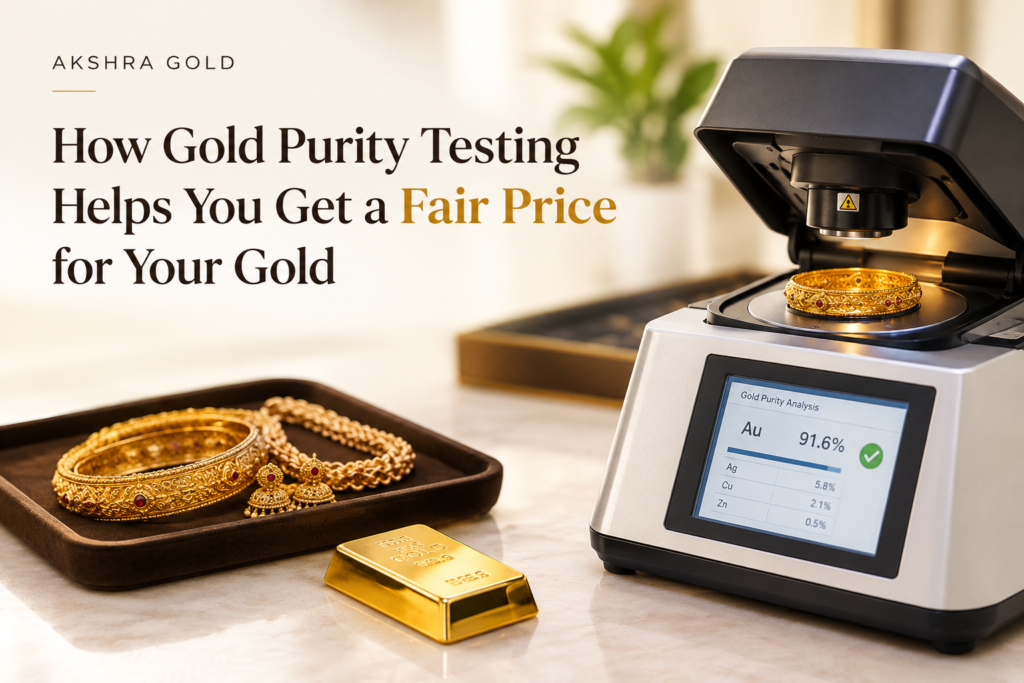
How Gold Purity Testing Helps You Get a Fair Price for Your Gold

Selling gold sounds simple until you try to do it. Gold prices change from day to day, sometimes even within the same day, and getting a fair price for the gold you’re selling is not something you stumble into by luck. It’s a skill and to identify gold purity helps in fair price. You need to know the gold rate of the day, you need a tester you can rely on, and you need a buyer who won’t quietly shave value off your jewellery the moment you turn your back. Miss any one of these, and that “fair price” you were hoping for slips away without you even noticing. The Mental Checklist Every Gold Buyer Runs Buying is no easier. Every time my family went for gold shopping, there was a small mental checklist running in the background the return value of the piece, the gold purity, which company we were buying from, whether the BIS hallmark was there, how today’s rate compared to what we’d seen elsewhere, what the making charges actually covered, how GST would be added to the final bill, and of course, the exact weight of the piece being weighed in front of us. On paper it looks like a lot to track. In practice, it becomes second nature but only after you’ve done it enough times, or trusted someone who has. Why We Always Went to the Same Small Shop When I was younger, I used to tag along with my family on these gold shopping trips, and one thing always confused me we never went to the big, flashy stores. We went to the same small, unassuming shops my family had known since their own childhood. Whenever it was time to buy jewellery, whether we were exchanging old, worn-out pieces or asking for cash back, it was always the same shop, the same shopkeeper. I didn’t understand it back then. Why walk past bigger stores with fancier displays just to go somewhere smaller and less impressive? Trust Is Built on People, Not Brands It took me years to actually get it. In the gold business, people don’t put their trust in a brand name or a convenient location they put their trust in a person. The shopkeeper who has weighed your grandmother’s bangles and your mother’s earrings for thirty years earns something that no amount of advertising or store design can buy trust. And once that trust is there, it holds. It’s the reason my family kept going back to the same store even when newer, shinier ones opened up around town. They trusted the person on the other side of the counter to check the gold purity honestly, quote a fair price honestly, and not cut corners when no one else was watching. What Really Matters When Buying Gold That’s what makes this whole thing fascinating to me now. Gold purity, fair price, hallmark checks, making charges all of it matters, and all of it can technically be verified on your own. But at the heart of it, the real skill isn’t just knowing these details. It’s knowing How the gold purity testing helps in fair price Every business, gold or otherwise, needs a face people can rely on. A number on a certificate can be faked. A discount can be a gimmick. But a reputation built over years, shop after shop, generation after generationthat is much harder to fake, and much easier to trust. The Real Lesson Behind Gold Buying So the next time someone tells you gold buying is just about checking the rate, remember it’s about the person standing behind the counter just as much as it is about the metal on the scale.

Scroll to Top
Call Now Button